Cover Letter Resources
In-depth guides on writing and structuring a cover letter that earns the next 30 seconds of attention — and the interview that follows.

What this hub covers
Structure & format
From the 4-paragraph formula to one-page rules and proper salutations — the skeleton your letter hangs on.
Hooks & openings
Specific first lines that earn the next sentence: accomplishment hooks, mission hooks, and referral openers.
Tailoring & personalization
How to mirror the job description without keyword stuffing, and how to research the company in 10 minutes flat.
Tone, length & etiquette
When to be formal, when to be warm, what to leave out — and how to address letters when you can't find a name.
Closings & follow-up
Confident closings that don't sound passive or pushy, plus follow-up timing that doesn't annoy.
Special situations
Career changes, employment gaps, no-experience entry roles, internal moves, and remote-only applications.
Read the guides
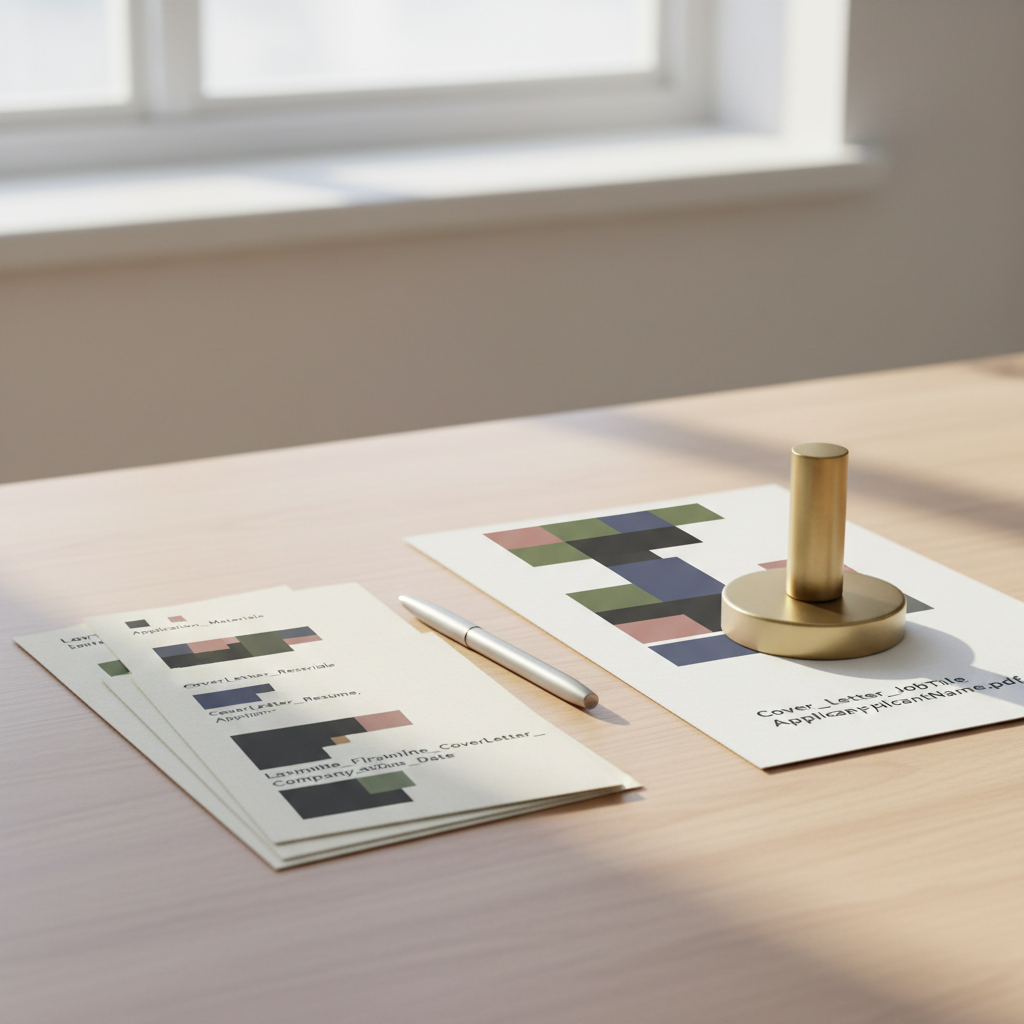
Cover Letter File Naming Conventions
Practical guidance for cover letter file naming conventions — what to lead with, what to cut, and how to iterate based on real feedback.
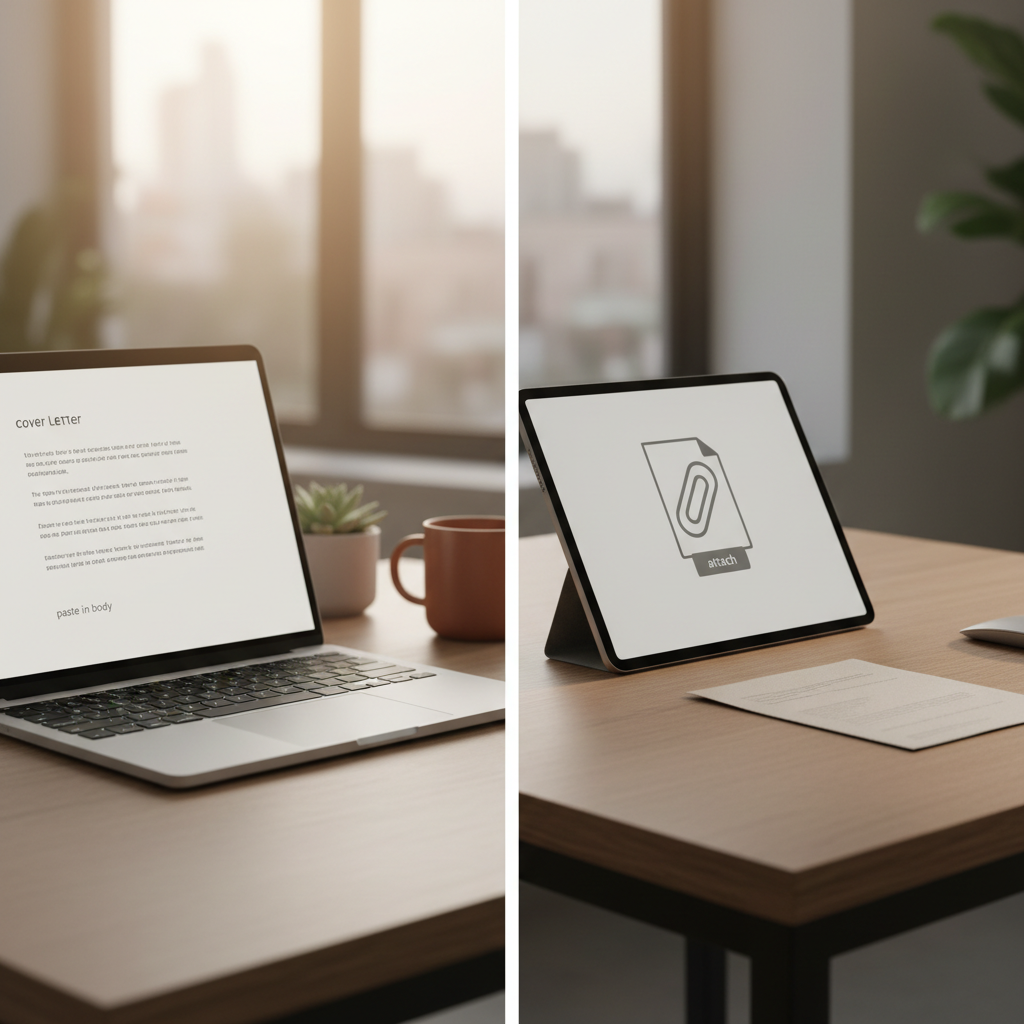
Cover Letter: Email Body vs Attachment
Practical guidance for whether to paste the cover letter in the email body or attach it — what to lead with, what to cut, and how to iterate based on real feedback.

Cover Letter When You Know Someone at the Company
Practical guidance for cover letters when you have an internal connection — what to lead with, what to cut, and how to iterate based on real feedback.

Cover Letter for a Boomerang Employee
Practical guidance for cover letters when returning to a former employer — what to lead with, what to cut, and how to iterate based on real feedback.

Cover Letter for a Promotion Application
Practical guidance for cover letters for internal promotion applications — what to lead with, what to cut, and how to iterate based on real feedback.

Cover Letter for a Lateral Move
Practical guidance for cover letters for lateral internal moves — what to lead with, what to cut, and how to iterate based on real feedback.
Cover Letter for a Different Department
Practical guidance for cover letters for cross-department internal moves — what to lead with, what to cut, and how to iterate based on real feedback.

Cover Letter for a Competitor Application
Practical guidance for cover letters when applying to a direct competitor — what to lead with, what to cut, and how to iterate based on real feedback.

Cover Letter for a Dream Company Application
Practical guidance for cover letters for a dream company application — what to lead with, what to cut, and how to iterate based on real feedback.
Tools & related hubs
AI Cover Letter Generator
Draft a tailored letter in under a minute, then edit in your own voice.
OpenCover Letter Templates
Designer-made templates that match every Resumeva resume layout.
OpenCover Letter Builder
Step-by-step builder with real-time tips from career coaches.
OpenResume Resources
Pair your cover letter with a resume that gets past the ATS.
OpenQuick answers
Do recruiters still read cover letters in 2026?
Often, yes. Some recruiters and hiring managers read cover letters and some don't, and practices vary by employer. When a letter is optional, a short, specific one is a low-cost way to explain your fit.
How long should my cover letter be?
Three to four short paragraphs, ideally 250–350 words. Anything past one page costs you the attention you've already earned.
Should I reuse the same letter for multiple jobs?
Reuse the structure, never the specifics. Always rewrite the opening line and the 'why this company' paragraph for each application.
Is it okay to use AI to draft my cover letter?
Drafting yes, sending raw output no. Use AI to break the blank-page problem, then rewrite in your voice with your specific examples.
What if the job posting says cover letter optional?
Send one anyway. 'Optional' is often a soft test — candidates who put in the extra effort consistently get more callbacks.