Resume for a Nurse Moving into Health-Tech
Master your nurse to tech resume transition with strategic framing, ATS optimization, and expert career-change tips to land a high-paying health-tech role.
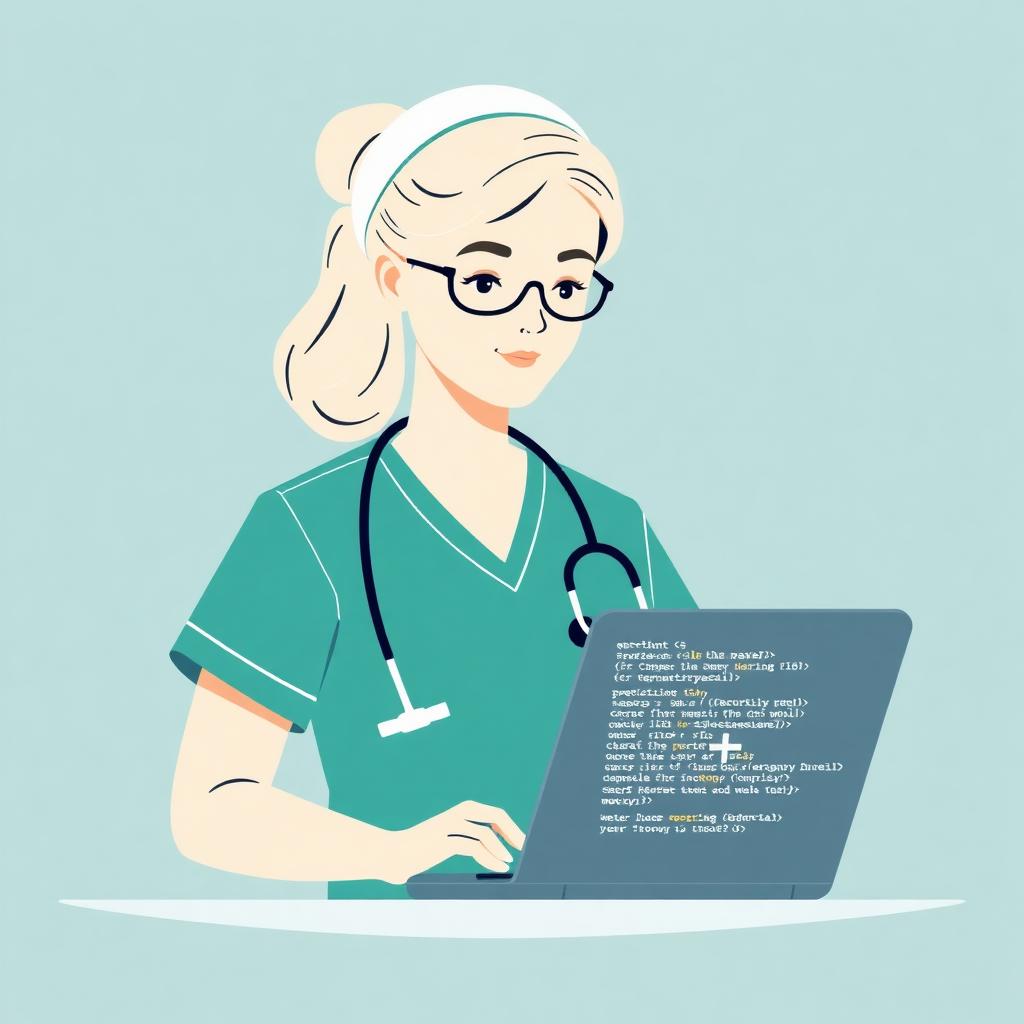
The healthcare landscape is undergoing a radical digital transformation, and the most valuable asset in this shift isn't just the code—it is the clinical perspective. As a nurse, you possess a unique understanding of patient workflows, diagnostic hurdles, and the high-stakes environment of care delivery that software engineers simply cannot replicate. However, moving from the bedside to a health-tech company requires more than just a list of your clinical rotations. It demands a fundamental shift in how you present your professional identity. When a recruiter at a health-tech startup looks at a resume, they aren't checking for your IV insertion success rate; they are looking for evidence of systems thinking, data fluency, and a solution-oriented mindset. Transitioning into health-tech as a clinical professional is a powerful career move that offers improved work-life balance, competitive salaries, and the ability to influence patient outcomes at scale. But to make this leap, your nurse to tech resume must bridge the gap between 'care provider' and 'product expert.' This guide will walk you through the process of auditing your nursing experience, identifying transferable digital skills, and restructuring your resume to capture the attention of technical hiring managers. By the end of this deep dive, you will know exactly how to leverage your hands-on experience to become the bridge between clinical necessity and technological innovation, ensuring your application doesn't just get read, but gets results.
Reframing the Clinical Mindset for a Corporate Audience
The primary challenge in a nurse to tech resume is overcoming the perception that your skills are purely manual or task-based. Recruiters in the tech sector operate in a world of scalability, user experience (UX), and key performance indicators (KPIs). If your resume focuses exclusively on 'direct patient care' and 'medication administration,' a hiring manager might struggle to see how those skills translate to a role as a Clinical Product Manager or an Implementation Consultant. To bridge this divide, you must reframe your daily nursing tasks as business outcomes. For example, instead of saying you 'managed care for five patients per shift,' describe it as 'prioritizing high-stakes deliverables in a fast-paced, high-pressure environment while ensuring 100% compliance with safety protocols.' Think about the software you use daily, such as Electronic Health Records (EHR) like Epic or Cerner. In the tech world, your ability to navigate these complex systems makes you a 'power user' and a 'subject matter expert (SME).' When you train a new hire on these systems, you are performing 'onboarding' and 'user training.' When you identify a flaw in the charting workflow and report it to your supervisor, you are engaging in 'workflow optimization' and 'UX feedback loops.' By auditing your daily actions through this corporate lens, you begin to build a narrative that sounds familiar to a tech recruiter. This doesn't mean you should hide your nursing identity; rather, you should highlight that your clinical intuition is the engine that drives your ability to improve healthcare software. The goal is to demonstrate that you understand not just how to use a tool, but why the tool is necessary and how it could be improved for the end-user.
Identifying and Amplifying Your Transferable Digital Skills
In health-tech, companies are desperate for people who speak both 'hospital' and 'hardware.' Your healthcare background provides you with a depth of domain knowledge that tech-natives lack, but you must prove your technical literacy. Start by cataloging every digital tool, platform, and methodology you have interacted with. Have you participated in a pilot program for a new bedside monitoring device? That is 'Beta Testing.' Have you helped transition your department from paper records to an EHR? That is 'Digital Transformation' and 'Change Management.' These keywords are high-value currency in the tech industry. Beyond specific software, consider your analytical skills. Nurses are data-driven by nature—you look at lab values, vital signs, and patient histories to make critical decisions. In tech, this is called 'Data Analysis' and 'Evidence-Based Decision Making.' Recruiters often look for candidates who can take complex information and distill it into actionable insights. If you have ever served on a hospital committee for quality improvement or infection control, you have experience in 'Process Improvement' and 'Quality Assurance.' Emphasize these roles on your resume. Mentioning your familiarity with HIPAA compliance is also vital, as data security is a massive concern for health-tech firms. By highlighting these specific intersections of care and technology, you position yourself as a multidisciplinary professional who reduces the training burden for a new employer. You aren't just a nurse who knows technology; you are a health-tech professional with clinical roots.
Optimizing for the ATS: The Secret Gatekeeper
Most tech companies, from tiny startups to conglomerates like Optum or Verily, use Applicant Tracking Systems (ATS) to filter resumes before a human ever sees them. These systems are programmed to look for specific keywords related to the job description. If you are applying for a 'Clinical Analyst' role, but your resume is filled with terms like 'phlebotomy' and 'wound care,' the ATS may automatically disqualify you for a lack of relevance. To beat the algorithm, you must tailor your nurse to tech resume for every single application. This means scanning the job description for terms like 'Agile,' 'SaaS,' 'Product Lifecycle,' or 'Interoperability' and finding organic ways to include them in your professional summary and experience sections. Using a tool like Resumeva’s ATS Checker can be a game-changer during this phase. It allows you to upload your resume alongside the job posting to see exactly where you are missing critical keywords. For instance, if the job mentions 'Stakeholder Management' three times and your resume only mentions 'Teamwork,' the checker will flag this discrepancy. In the tech world, stakeholders include doctors, engineers, and hospital administrators. By refining your language to match the industry standard, you ensure that your resume survives the initial automated scan. Remember, the ATS is not looking for the best nurse; it is looking for the best match for the specific technical requirements defined by the hiring team. Don't leave your first impression up to chance when data-backed tools can give you the exact roadmap to success.
How to Structure Your Nurse-to-Tech Experience Section
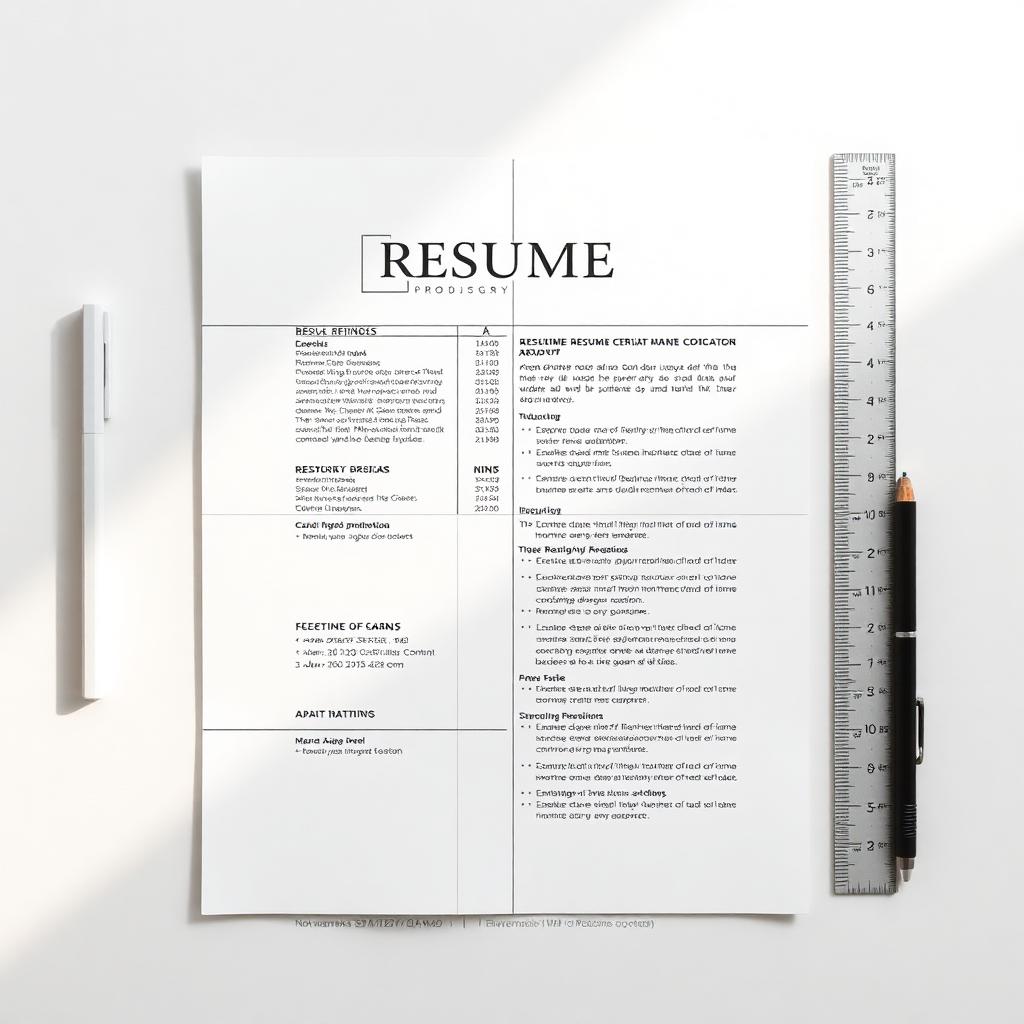
The standard chronological resume format remains the most effective, but the content within each entry needs a major facelift. Instead of listing duties, focus on accomplishments and impact. A tech-focused resume should follow the Google 'X-Y-Z' formula: Accomplished [X] as measured by [Y], by doing [Z]. For a nurse, this might look like: 'Decreased charting errors by 15% (Y) by leading a departmental training session (Z) on new EHR documentation protocols (X).' This demonstrates that you are results-oriented and understand how your actions influence the broader organizational goals. For each past role, select three to four bullet points that highlight tech-adjacent tasks. If you worked in a Level 1 Trauma center, emphasize your ability to perform under pressure and manage complex systems, rather than the specifics of emergency medicine. If you worked in home health, focus on your autonomy and your use of mobile health (mHealth) applications for remote patient monitoring. Additionally, consider adding a 'Technical Skills' sidebar or section. This is where you list proficiency in Excel, SQL, Tableau, or any specific healthcare IT systems you have mastered. Even if you are a beginner in coding, mentioning that you are currently learning Python or R shows a proactive 'growth mindset,' which is highly prized in the tech ecosystem. Your goal is to show a trajectory—that your move into tech isn't a sudden whim, but a logical progression of your interest in improving healthcare delivery through innovation.
Leveraging Modern Tools for a Professional Polish
In the tech industry, aesthetics and clarity matter. A cluttered, five-page clinical CV will likely be ignored. Tech resumes should be concise, usually one page (maximum two if you have 10+ years of experience), and utilize clean, modern layouts. This is where using a dedicated platform like Resumeva’s Resume Builder can provide a significant advantage. It offers templates designed specifically for the tech industry—prioritizing readability, logical flow, and professional branding. A modern template signals to the recruiter that you are tech-savvy and understand the industry's culture before they even read a single word of your experience. Furthermore, the transition from nursing to tech often requires a strong cover letter to explain the 'why' behind your shift. Using Resumeva’s Cover Letter Builder can help you draft a compelling narrative that connects your bedside frustrations with your desire to build technological solutions. Perhaps you saw a recurring technical failure that compromised patient safety, and now you want to work for the company that is fixing that very problem. That story is powerful. Using professional tools ensures that your formatting is flawless, your tone is appropriate, and your message is clear. In an industry that prides itself on efficiency and design, showing up with a polished, professional application package sets you apart from other clinical applicants who may be stuck in traditional hospital application styles.
Bulleted Checklist: The Tech-Ready Nurse Audit
Before you click submit on your next application, run through this checklist to ensure your resume speaks the language of the health-tech industry. If you can't check off these items, spend another hour refining your bullet points.
- Replaced clinical verbs (e.g., 'administered') with business verbs (e.g., 'implemented', 'optimized', 'managed').
- Highlighted specific EHR systems (Epic, Cerner, Meditech) as technical proficiencies.
- Included a 'Professional Summary' that explicitly mentions your goal of moving into health-tech.
- Quantified at least three achievements using numbers, percentages, or time-saved metrics.
- Listed any certifications beyond nursing, such as Project Management Professional (PMP), Informatics, or Google Analytics.
- Removed outdated or irrelevant clinical certifications that don't apply to a corporate environment.
- Identified 'Soft Skills' like cross-functional collaboration, crisis management, and troubleshooting.
The Importance of the Professional Summary for Career Changers
For a career changer, the professional summary is the most critical piece of real estate on the resume. It is your elevator pitch. Instead of a generic objective like 'Seeking a nurse position in a tech company,' aim for a bold statement of value. Example: 'Registered Nurse with 8 years of clinical experience in high-acuity environments, transitioning into health-tech as a Clinical Solutions Analyst. Expert in EHR workflow optimization, cross-functional team leadership, and translating complex medical requirements for technical development teams. Proven track record of improving patient safety outcomes through the strategic adoption of digital health tools.' This summary immediately tells the recruiter who you are, what you’ve done, and most importantly, what you can do for them. It bridges the gap between your past and your future. It also allows you to front-load the most relevant keywords that the ATS might be looking for. By framing yourself as a 'Clinical Solutions Analyst' (even if that hasn't been your official title yet), you are helping the recruiter visualize you in the role. The summary should be concise—no more than four lines—and should focus on the future while honoring the expertise of your past. It is the hook that ensures the recruiter keeps reading down to your experience section, rather than moving on to the next candidate.
Build your ATS-friendly resume
Choose a layout and build a resume using your own experience.
Check your ATS score
Review what Resumeva extracts and the findings its own scoring method produces.
Frequently asked questions
Do I need to learn coding to move from nursing to health-tech?+
Not necessarily. Many roles like Clinical Analyst, Product Manager, or Implementation Specialist value your domain expertise more than your ability to write code. However, having a basic understanding of how software is built will significantly boost your resume.
Should I keep my RN license on my resume?+
Absolutely. Your RN credentials provide you with authority and credibility in the health-tech space. List it prominently next to your name (e.g., Jane Doe, RN) and in your certifications section.
How can I show 'technical experience' if I've only worked at the bedside?+
Focus on your use of medical technology, EHR systems, and participation in any hospital-wide software rollouts. Being a 'Super User' for a new piece of technology is valid technical experience.
What tech roles are best suited for nurses?+
Common pathways include Clinical Informatics, Healthcare Product Management, Sales Engineering, Clinical Research Associates, and Health IT Support.
Is a two-page resume okay for a nurse moving into tech?+
In the tech world, one page is preferred, especially if you have less than 10 years of experience. If you have extensive experience, keep it to two, but ensure the most tech-relevant information is on the first page.
Keep building
Tools and examples that pair with this guide.
General career guidance and examples. Adapt suggestions to your own experience; employer requirements and hiring outcomes vary.