Resume Guide for Refugees and New Immigrants
A comprehensive guide for refugees and immigrants on how to translate international experience into a competitive, ATS-friendly resume for the local job market.

Relocating to a new country is a monumental life change that brings both immense challenges and incredible opportunities. For refugees and new immigrants, the journey to professional resettlement often begins with a single document: the resume. However, the standards for resumes vary significantly across borders. What was considered a perfect CV in your home country might not meet the expectations of hiring managers in your new location. This guide is designed to help you navigate these nuances, bridging the gap between your international background and the local job market's requirements. We will explore how to present your global experience as a unique asset rather than a hurdle to overcome. Securing your first job in a new country is about more than just a paycheck; it is about reclaiming your professional identity and building a foundation for your new life. Recruiters are increasingly looking for diverse perspectives, but they often struggle to understand foreign credentials or non-linear career paths caused by displacement. By the end of this article, you will know how to structure your resume to pass through Automated Tracking Systems (ATS), how to explain employment gaps caused by relocation, and how to communicate your skills in a way that resonates with local employers. Whether you are a seasoned professional or a recent graduate, these strategies will empower you to showcase your true value and potential.
Hiring Managers Value Global Perspective: Reframing Your Status
One of the most common mistakes new immigrants make is viewing their international background as a disadvantage. In reality, many modern companies are actively seeking 'global citizens' who possess cross-cultural communication skills, adaptability, and resilience. When drafting your resume, focus on how your experience navigating different regulatory environments or markets can benefit a prospective employer. For instance, if you managed operations in a high-pressure environment during a period of economic instability, that demonstrates exceptional crisis management and problem-solving skills that are highly transferable to any industry. Recruiters appreciate candidates who can remain calm under pressure, and your history of relocation is living proof of that ability. Instead of focusing on the 'foreign' nature of your work, focus on the 'impact' of your work. Use universal business terminology. If you managed a team in Damascus, Kyiv, or Caracas, use the same metrics you would use for a team in New York or London: 'Increased team productivity by 20%' or 'Managed a budget equivalent to $50,000 USD.' By standardizing your achievements, you make it easier for a local hiring manager to visualize you performing those same tasks within their organization. Remember, the goal is to make your transition look like a strategic career move rather than a chaotic disruption. Highlighting your fluency in multiple languages as a 'Communication' asset rather than just an 'Additional Skill' can also set you apart in sectors like logistics, customer service, and international trade.
Mastering the Local Resume Format and Style
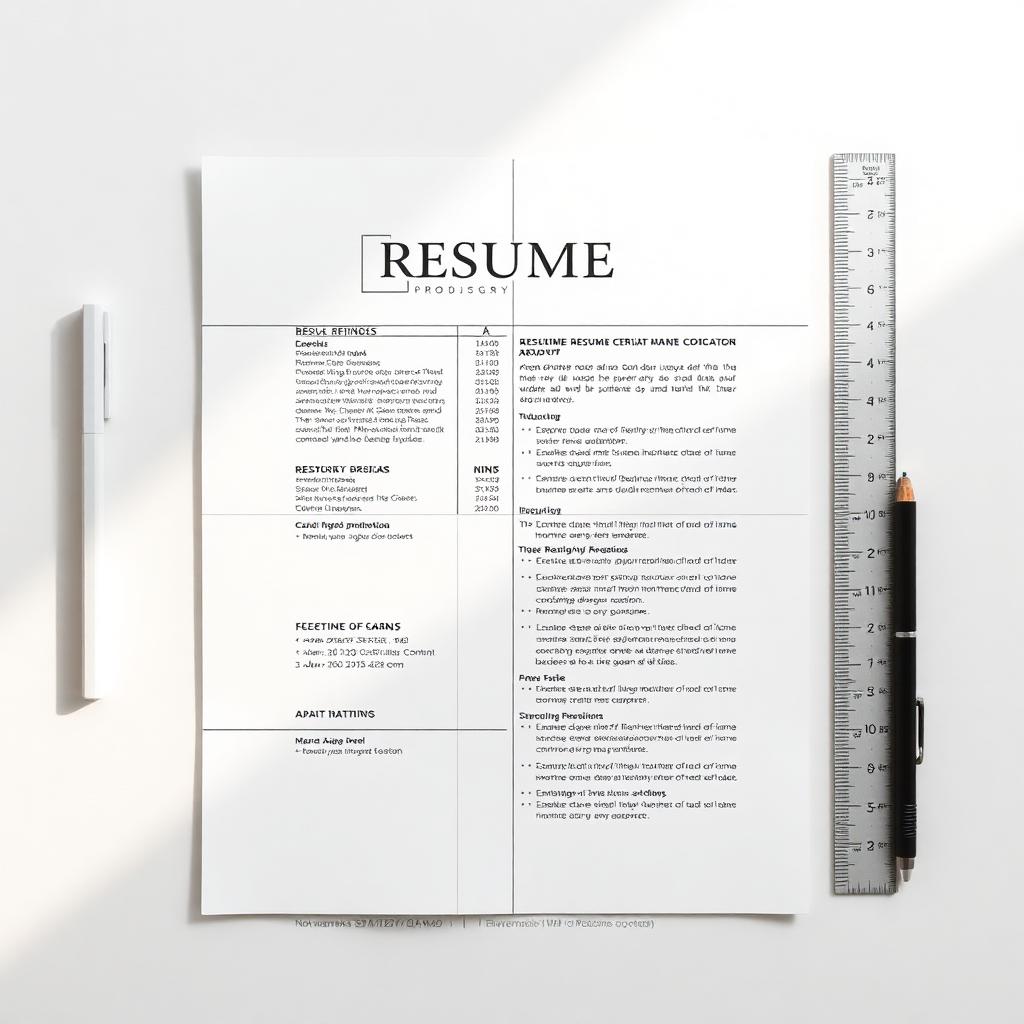
Resume formats differ wildly around the world. In many countries, it is standard to include a photo, your age, marital status, or even your religion. However, in regions like North America and parts of Europe, including this information can actually lead to your resume being rejected immediately to avoid bias and legal complications. A standard professional resume should be clean, concise, and focused strictly on your qualifications. Use a reverse-chronological format, which lists your most recent experience first. This is the format most preferred by recruiters because it provides a clear snapshot of your current skill level and recent history. Keep your design simple. Use professional fonts like Arial, Calibri, or Helvetica, and ensure there is plenty of white space so the document is easy to read. Most recruiters spend less than ten seconds scanning a resume before deciding whether to keep it or discard it. If your layout is cluttered or uses non-standard headings, they might miss your most important qualifications. If you are worried about the visual appeal or technical structure of your document, using a tool like the Resumeva Resume Builder can ensure your template meets all modern professional standards. It allows you to focus on the content while the software handles the formatting, ensuring your resume looks polished and professional from the first glance.
Standardizing Your International Education and Credentials
A major hurdle for many immigrants is the 'localization' of degrees and certifications. A 'Licentiate' or 'Diploma' from your home country might be equivalent to a Bachelor’s or Master’s degree, but a local recruiter might not know that. Explicitly state the equivalency if you have had your credentials evaluated by a recognized service (like WES or ECE). For example, you can list it as: 'Bachelor of Science in Engineering (Equivalent to US Bachelor’s Degree).' This removes the guesswork for the recruiter and places you on a level playing field with local applicants. If your university is well-known in your region but perhaps not globally, adding a short one-sentence description of the institution can provide helpful context. Don't forget to include local certifications you have earned since arriving. Even if you are an expert in your field, taking a short local course or obtaining a regional certification shows your commitment to integrating into the local professional landscape. It demonstrates that you are proactive and up-to-date with local regulations and industry standards. This also helps fill the 'current' time slot on your resume if you are still looking for your first full-time role. Many recruiters look for continuous learning as a sign of high potential. If you have any licenses that are currently 'in progress,' list them with an expected completion date. This shows you are legally and technically preparing yourself for the requirements of the job.
How to Handle Employment Gaps and the Relocation Period
It is completely normal for refugees and immigrants to have a gap in their employment history during the months or years they were relocating, securing visas, or settling their families. You do not need to feel ashamed of this gap, nor should you try to hide it with 'creative' dating. Instead, be transparent but brief. You can include a small line in your professional experience section such as: 'Career Break: Full-time relocation and transition to [New Country]' or 'International Relocation and Professional Development.' This tells the recruiter exactly why you weren't working and prevents them from assuming you were fired or unable to find work. During this gap, you likely gained skills that are valuable. Did you learn a new language? Did you volunteer at a local community center? Did you complete online certifications via platforms like Coursera or LinkedIn Learning? Many immigrants use their relocation period to sharpen their technical skills or learn the local language to a professional level. Mentioning these activities transforms a 'gap' into a period of 'active transition.' Recruiters view this positively as it shows initiative. If you were managing complex logistics for your family’s move, you have effectively demonstrated project management and organizational skills. While you might not list 'moving' as a job, the resilience you built during that time is a soft skill that you can discuss during the interview.
Optimizing for the Applicant Tracking System (ATS)
Most large companies use an Applicant Tracking System (ATS) to filter resumes before a human ever sees them. These systems look for specific keywords that match the job description. For refugees and immigrants, the challenge is that the vocabulary used for specific tasks in your home country might differ from the local terminology. For example, if you were a 'Solicitor' in the UK but are moving to the US, you should use terms like 'Attorney' or 'Legal Counsel' if that is what the job description uses. Mirroring the language of the job posting is the single most effective way to ensure your resume survives the automated screening process. To see how well your current resume stacks up, you should use the Resumeva ATS Checker. This tool compares your resume against specific job descriptions to identify missing keywords and formatting errors that might cause the system to skip your application. It provides a score and actionable feedback on how to improve your alignment with the role. Many immigrants find that they have the right skills but are using the 'wrong' words. By adjusting your resume based on ATS feedback, you significantly increase your chances of getting an interview. Remember, the ATS is a robot; it doesn't understand context or 'hidden talent.' You must be explicit and use the exact terms it is programmed to find.
Checklist: Essential Elements for Your New Resume
Before you start sending out applications, review your document against this checklist. These are the non-negotiable elements that local employers expect to see in a professional application. Ensuring these are correct will help you avoid simple mistakes that could lead to rejection.
- Include local contact information: A local phone number and a professional email address (name.surname@email.com).
- Add a 'Professional Summary': A 3-4 line paragraph at the top that highlights your years of experience and core expertise.
- Link your LinkedIn Profile: Ensure your LinkedIn is updated and matches the dates on your resume, as recruiters will check this.
- Quantify your achievements: Use numbers, percentages, and currencies to show the scale of your past responsibilities.
- Tailor every application: Never use the same resume for two different jobs; always adjust the skills section to match the specific job post.
- Proofread for local spelling: Use a local spell-checker to ensure you are using the correct regional spelling (e.g., 'Color' vs 'Colour').
Leveraging Soft Skills and Cultural Competency
Soft skills are often more universal than technical skills. Resilience, adaptability, and the ability to work in diverse teams are highly prized in the modern workplace. As a refugee or immigrant, you have these in abundance. In your 'Skills' section, don't just list technical software like Excel or Python. Include 'Cross-Cultural Communication,' 'Multilingual Proficiency,' and 'Adaptability.' These are not just buzzwords for you; they are traits you have demonstrated through the significant life change of moving between countries. Explain how these skills helped you succeed in your previous roles or how they helped you bridge gaps between different departments or client groups. Many companies now have 'Diversity, Equity, and Inclusion' (DEI) initiatives. They are specifically looking to hire people who bring different life experiences to the table. By framing your background as a source of strength, you align yourself with these corporate values. During the interview prep, think of stories where your unique perspective helped solve a problem. On the resume, this can be reflected in your 'Professional Summary' by describing yourself as a 'Global professional with a track record of success across diverse international markets.' This positions you as an expert with a broad worldview, which is a significant competitive advantage over candidates who have only ever worked in one city or one culture.
Next Steps: Building Your Career with Resumeva
The transition into a new job market is a marathon, not a sprint. It requires patience, constant refinement of your materials, and a bit of help from technology. Once you have a solid draft of your resume, your next task is to create a compelling cover letter that tells your story in more detail. A cover letter is the perfect place to briefly explain your relocation and express your enthusiasm for joining the local workforce. Unlike the resume, which is a list of facts, the cover letter allows your personality and determination to shine through. It is your chance to connect with the hiring manager on a human level. To make this process easier, you can use the Resumeva Cover Letter Builder. It offers templates and pre-written phrases that help you structure your narrative professionally. Following this, always run your final documents through the ATS Checker one last time. By using these specialized tools, you ensure that your 'immigrant' status doesn't mean your resume looks 'foreign' to an automated system. Instead, you present yourself as a polished, prepared, and highly qualified candidate who is ready to contribute to your new community from day one. You have already done the hard work of moving across the world; let these tools do the heavy lifting of getting your foot in the door.
Build your ATS-friendly resume
Choose a layout and build a resume using your own experience.
Check your ATS score
Review what Resumeva extracts and the findings its own scoring method produces.
Frequently asked questions
Should I mention my visa status on my resume?+
Generally, no, unless specifically asked in the filing process. If you have the legal right to work, that is what matters. You can briefly mention 'Authorized to work for any employer' in your summary if you feel it will reassure recruiters.
What if my previous employers no longer exist or are in a conflict zone?+
This is a common issue for refugees. List the company as it was and include a link to its website if it still exists. For background checks, keep any old contracts, payslips, or tax records you might have saved to prove your employment history.
How many pages should an immigrant's resume be?+
Ideally, keep it to one page if you have less than 10 years of experience, and two pages if you are a senior professional. Avoid long, multi-page CVs which are common in some academic or international settings.
Do I need to list my high school education?+
If you have a university degree or several years of work experience, you can omit high school. Only include it if it is your highest level of education or if the job specifically requires it.
Can I use references from my home country?+
Yes, but ensure they speak the local language or that you provide a way for the recruiter to communicate with them via email. It is even better if you can supplement these with at least one local reference from a volunteer position or a short-term gig.
Keep building
Tools and examples that pair with this guide.
General career guidance and examples. Adapt suggestions to your own experience; employer requirements and hiring outcomes vary.