Resume for a Stay-at-Home Parent Returning to Work
Learn how to bridge your employment gap and translate caregiving skills into professional assets when returning to work after being a stay-at-home parent.

Returning to the workforce after a period of full-time caregiving is both an exciting transition and a significant logistical challenge. For many stay-at-home parents, the primary concern lies in the 'employment gap'—that stretch of time where professional titles were replaced by domestic responsibilities. However, the modern hiring landscape is shifting. Recruiters are increasingly recognizing that the skills required to manage a household, coordinate complex schedules, and navigate developmental milestones are fundamentally the same skills required for project management, operations, and team leadership. The key to a successful return-to-work strategy is not to hide your time away, but to frame it strategically. This guide provides a comprehensive roadmap for transforming your resume into a compelling narrative that honors your past career while validating your current capabilities. We will explore how to select the right resume format, how to handle the 'gap' without apology, and how to leverage modern tools to ensure your application survives the scrutiny of Applicant Tracking Systems (ATS). By the end of this article, you will have a clear, actionable plan to transition from the home-front back to the corporate world with confidence and professional authority.
Identifying the Right Resume Format for Your Career Break
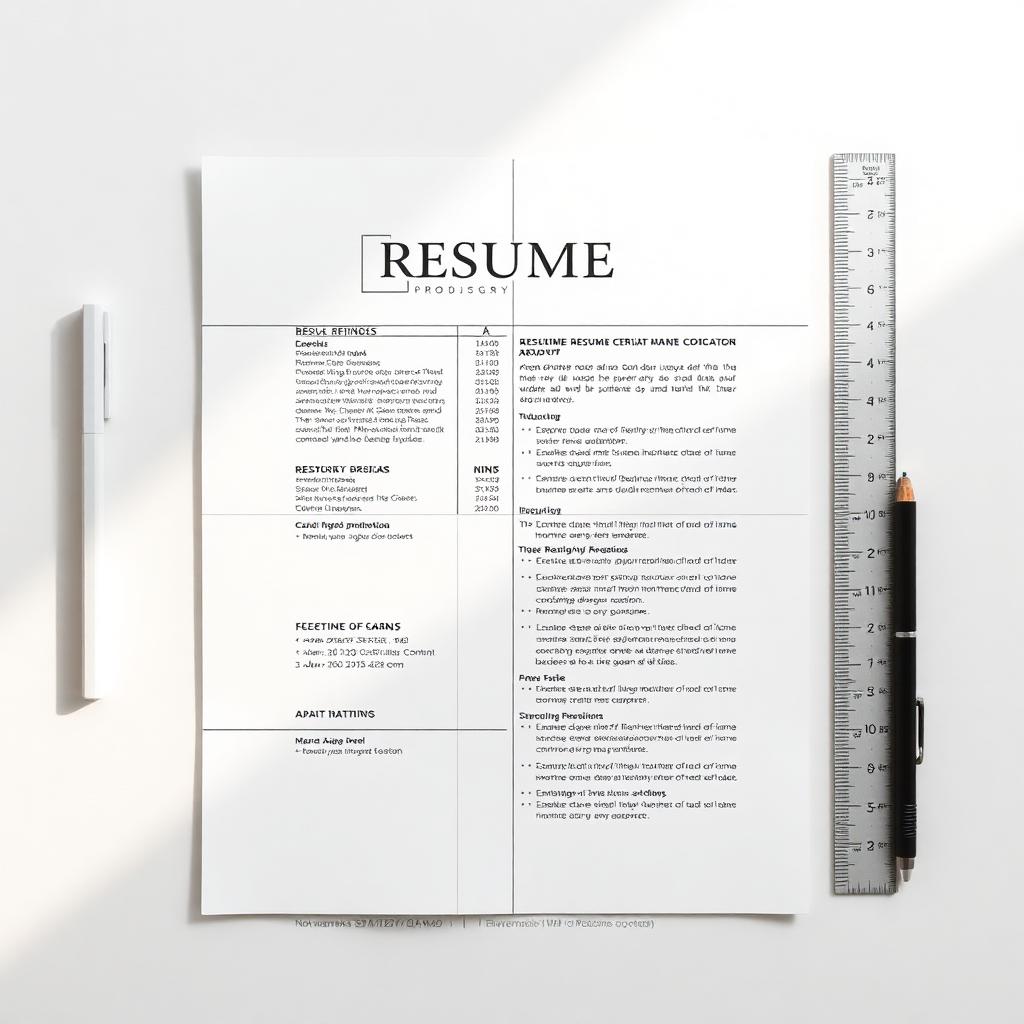
The traditional reverse-chronological resume is the gold standard for most professionals, but for a stay-at-home parent with a multi-year gap, it can inadvertently draw the eye to the period of inactivity first. To counter this, many career experts suggest a 'Hybrid' or 'Combination' resume format. This style allows you to lead with a robust professional summary and a dedicated 'Core Competencies' section, placing your most relevant skills at the very top of the page before the reader ever reaches your timeline. This ensures that a hiring manager sees what you can do before they see when you last did it. If your break was longer than five years, the hybrid approach is particularly effective because it allows you to group similar experiences from your previous career together. Instead of listing every role in descending order, you can highlight 'Key Professional Achievements' that demonstrate high-level success. For those who spent their time away from work engaged in significant volunteerism or freelance projects, these should be treated as professional entries. A board position for a non-profit or a recurring freelance consultancy is not 'filler'; it is valid work experience that maintains your professional continuity. Avoid the 'Functional' resume format, which strips away dates entirely. Many modern recruiters view these with suspicion, assuming the candidate is trying to hide a lack of experience or character issues. The hybrid model offers the best of both worlds: it provides the skill-based focus you need to distract from a gap while maintaining the chronological integrity that builds trust with a prospective employer. By carefully choosing how to present your history, you control the narrative of your career path.
Translating Caregiving into Professional Competencies
One of the most common mistakes returning parents make is attempting to use 'home-maker' titles like 'Chief Domestic Officer' or 'Household CEO.' While these titles are meant to show humor or value, they often fail to resonate with automated screening tools and busy recruiters who are scanning for specific industry keywords. Instead of trying to give your time at home a corporate title, focus on the transferable skills you utilized during that period. If you managed a large household budget, coordinated logistics for school events, or negotiated with service providers, you were practicing financial management, event planning, and procurement. Think about the soft skills that have been sharpened by parenthood. Conflict resolution, crisis management, multitasking, and patience are highly valued in roles involving customer service, human resources, and project coordination. When describing these skills, avoid being overly 'parental' in your language. Instead of saying you 'managed children's schedules,' say you 'coordinated complex logistics and time-sensitive scheduling for multiple stakeholders.' This professionalizes the experience and makes it easier for a hiring manager to envision you performing similar tasks in an office environment. Furthermore, consider any community-facing work you did during your time off. Did you lead a fundraising drive? That is business development and sales. Did you reorganize the local library's check-out system? That is process improvement and operations. By looking at your activities through a professional lens, you can find dozens of examples of where you maintained your edge. The goal is to show that while your formal employment stopped, your professional growth did not. Recruiters value candidates who stay active and engaged, regardless of whether they were receiving a paycheck for that engagement.
Leveraging Technology: The Role of Resumeva in Your Return
Modern job searching is vastly different than it was even five years ago. Today, the majority of mid-to-large-sized companies use Applicant Tracking Systems (ATS) to filter out candidates before a human ever sees the resume. For a stay-at-home parent, this presents a unique barrier: if your resume doesn't contain the specific keywords the software is programmed to find, your application might be discarded regardless of your qualifications. This is where using a dedicated platform like Resumeva becomes essential to your success. Resumeva’s Resume Builder allows you to create a clean, modern design that is pre-optimized for ATS readability. It guides you through the process of selecting the right keywords for your target industry, ensuring that your skills are highlighted in a way that machines and humans both appreciate. Additionally, the Resumeva ATS Checker can scan your current draft against a specific job description to give you a 'match score.' This allows you to see exactly where your resume is falling short and where you need to bolster your language to better reflect the requirements of the role. Beyond just the resume, the transition back to work often requires a tailored cover letter that explains the 'why' behind your return. Resumeva’s Cover Letter Builder helps you craft a narrative that addresses your career break head-on with confidence, framing it as a deliberate choice followed by a high-energy return. By utilizing these professional tools, you bridge the gap between your domestic experience and the corporate requirements, presenting a polished, high-tech package that signals you are ready to hit the ground running in a digital-first workplace.
Addressing the Gap Without Apology
There is a psychological hurdle many parents face where they feel the need to apologize for their time away from the workforce. This 'apology' often manifests as a long, defensive explanation in the cover letter or a hesitant tone during the interview. To succeed, you must move past this. Taking time to raise a family is a valid life choice and one that many hiring managers have made themselves. When addressing the gap on your resume, be brief and factual. A simple line under your experience section such as 'Career Break for Family Management' with the dates is sufficient. In the professional summary at the top of your resume, you can frame your return as a proactive move. Use phrases like, 'Eager to leverage a decade of experience in marketing alongside newly refined project management skills to drive results for [Company].' This shifts the focus from the past (the gap) to the future (what you can do for them). It portrays you as a candidate who is focused, energized, and ready to recommit to a professional path. If you have used your time away to pursue continuing education, mention it prominently. Certification courses, webinars, or even self-taught skills in software like Python, Salesforce, or advanced Excel show that you are a self-starter who values professional development. In many ways, a candidate who returns to work after a break with updated certifications is more attractive than one who has been in the same role for ten years without learning a single new tool. Own your timeline; your history of caregiving is a chapter of your life, not a stain on your career.
Essential Checklist for the Returning Parent
Before you hit 'submit' on your first application, work through this checklist to ensure your resume meets the standards of today's competitive job market. These steps are designed to modernize your profile and remove any 'red flags' that might suggest your skills have stagnated.
- Update your contact information: Ensure your email address is professional and your LinkedIn profile is fully updated with a recent headshot.
- Audit your tech stack: List specific software you are proficient in (Slack, Zoom, Trello, Google Workspace) to show you are comfortable with remote and hybrid work tools.
- Remove outdated experience: If a role was more than 15 years ago, consider removing it or condensing it into a 'Previous Experience' section to make room for more recent wins.
- Verify your keywords: Scan the job description for 5-10 'must-have' skills and ensure they appear at least twice in your resume text.
- Practice your elevator pitch: Be ready to explain your career break in 30 seconds or less, focusing on your readiness to return rather than the reasons you left.
Networking: The Backdoor to the Shortlist
While a strong resume is a prerequisite, networking is often the fastest way for a stay-at-home parent to get back into a professional role. The 'hidden job market'—roles that are filled via referrals before they are ever widely advertised—is vast. Reach out to former colleagues, alumni, and professional acquaintances to let them know you are returning to the workforce. People who have worked with you in the past already know your work ethic and capabilities; they are your best advocates for bypassing the initial ATS screening that can sometimes be unkind to employment gaps. When you network, don't just ask for a job. Ask for 'informational interviews' to learn how the industry has changed during your absence. This serves two purposes: it gives you valuable intelligence on current trends and terminology, and it keeps you 'top of mind' when a position does open up. Many times, a referral from a trusted source can overcome any concerns a recruiter might have about a gap in your history. Social media, particularly LinkedIn, is a powerful tool here. Join groups related to your field, comment on industry news, and share insightful articles. By being active in these digital spaces, you signal to your network that you are re-engaging with your professional identity. It helps people see you not just as a parent, but as the specialist, manager, or creative you are. Relationship building is the most effective way to ensure your resume actually lands on the desk of a decision-maker who understands the value of your diverse background.
Quantifying Success in Your Previous Life
When you do list your previous professional roles, it is vital to use quantitative data whenever possible. A common pitfall is listing responsibilities instead of achievements. Instead of saying you were 'responsible for managing a sales team,' specify that you 'led a team of 12 to exceed quarterly targets by 15% for three consecutive years.' Numbers provide a universal language of success that transcends time. Even if those achievements happened several years ago, they demonstrate a history of high performance that a recruiter will find attractive. If your gap was long and you don't have recent professional metrics, apply this logic to your volunteer or community work. Did you raise $5,000 for a school auction? That is a specific, measurable result. Did you increase parent participation in a community program by 30%? That shows an ability to drive engagement. By providing concrete data, you remove the ambiguity from your resume and provide 'proof of concept' for your skills. This data-driven approach also helps in negotiating your salary. When you can point to a history of producing measurable value, you are in a much better position to command a competitive wage, even after a break. You aren't just looking for 'a job'; you are offering a proven set of skills that have a track record of delivering results. Make sure every bullet point on your resume answers the question: 'What was the measurable impact of this action?'
Build your ATS-friendly resume
Choose a layout and build a resume using your own experience.
Check your ATS score
Review what Resumeva extracts and the findings its own scoring method produces.
Frequently asked questions
How far back should my resume go after a long break?+
Focus on the last 10-15 years of relevant experience. If your 'prime' career years happened before your break, you can still include them, but summarize roles older than 15 years to keep the document concise and focused on current industry standards.
Should I include my kids' names or ages on my resume?+
No. Personal details like your children's names, ages, or marital status should never be included on a resume. Keep the document focused strictly on your professional skills, volunteer work, and education to maintain professional boundaries.
Is it okay to list 'Stay-at-Home Parent' as my most recent job?+
It is better to list it as a 'Career Break' or 'Family Management' period. Use this section to briefly mention any relevant volunteer work, courses, or freelance projects you handled during that time to show you remained active.
What if my industry has changed significantly while I was away?+
Prioritize upskilling before applying. Take short, modern certification courses in software or methodologies currently used in your field. Listing these 'Recent Professional Development' items at the top of your resume shows you are current.
Can I use a functional resume to hide my six-year gap?+
It is generally not recommended. Most recruiters find functional resumes confusing or suspicious. Instead, use a hybrid resume that highlights your skills at the top but still includes a clear, honest chronological work history below.
Is a cover letter mandatory for a returning parent?+
Yes. It is your best opportunity to provide context for your career path and express your enthusiasm for returning. Use the cover letter to highlight your readiness and how your time away has actually strengthened your soft skills.
Keep building
Tools and examples that pair with this guide.
General career guidance and examples. Adapt suggestions to your own experience; employer requirements and hiring outcomes vary.