Explaining a COVID-Era Employment Gap on Your Resume
Learn how to expertly handle a COVID-era employment gap on your resume with recruiter-approved strategies and tactical wording for today's job market.
The professional landscape underwent a seismic shift in early 2020, leaving millions of high-performing individuals with unexpected breaks in their career timelines. Whether your departure from the workforce was due to industry-wide downsizing, health concerns, or the sudden demand for full-time caregiving at home, you are not alone. For many years, an employment gap was viewed as a red flag that required rigorous justification, but the global impact of the pandemic has fundamentally altered how hiring managers perceive these interruptions. Today, recruiters are significantly more empathetic toward gaps occurring between 2020 and 2023, provided the candidate handles the explanation with transparency and strategic positioning. In this comprehensive guide, we will explore why a COVID gap is no longer a career-ender and how you can frame this period to highlight your resilience rather than your absence. We will dive into specific resume formatting techniques, the nuance of 'active' versus 'passive' gaps, and how to use the latest digital tools to ensure your resume remains competitive in an increasingly automated screening environment. By the end of this article, you will have a clear roadmap for addressing your time away from the office with confidence, turning a potential vulnerability into a demonstration of your adaptability and personal growth.
The Evolution of Recruiter Sentiment Toward Pandemic Gaps
In the pre-2020 job market, a six-month gap often triggered immediate suspicion regarding a candidate's performance or reliability. However, recent trends in talent acquisition show a marked shift toward what industry experts call 'the empathy movement.' Recruiters and human resource professionals now expect to see gaps on resumes from this era. They understand that entire sectors—from hospitality and travel to non-essential retail—essentially evaporated overnight. Consequently, the presence of a COVID-related gap is rarely the reason a candidate is rejected today. Instead, the focus has shifted to how you spent that time and how you are re-entering the workforce. Many hiring managers now look for signs of 'career mindfulness,' where a candidate used the time to reflect on their goals or acquire new skills, even if those skills weren't strictly professional. When addressing this period, it is helpful to remember that the person reading your resume likely experienced their own set of pandemic-related challenges. They are looking for honesty and a brief explanation that allows them to check a box and move on to your qualifications. You do not need to provide a deep medical history or a detailed account of your family's personal struggles. A concise heading or a single line in your professional summary is often sufficient. In most industries, brevity is your ally. By normalizing your experience, you signal to the recruiter that you are not ashamed of the gap, which in turn gives them the confidence to focus on your relevant experience and future potential.
Strategic Resume Formatting for Career Interruptions
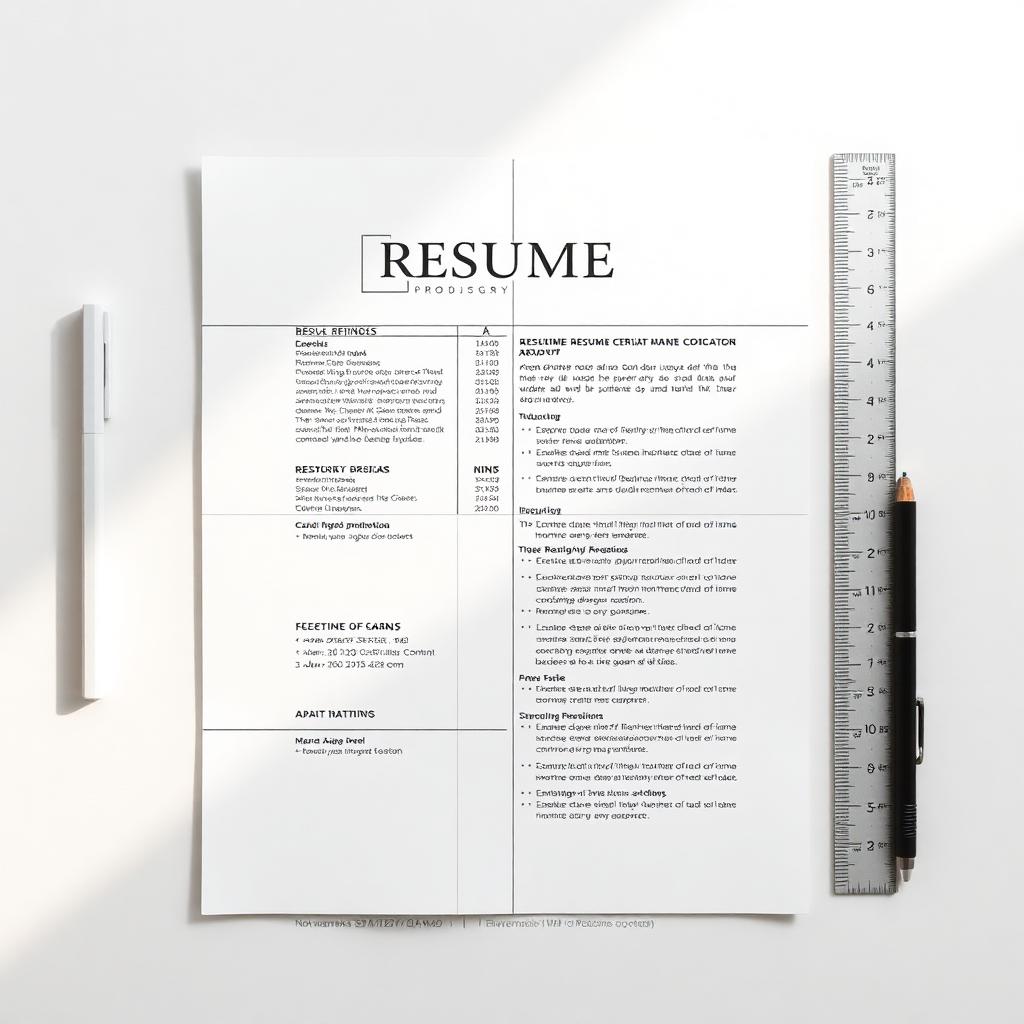
One of the most effective ways to manage a COVID-era gap is through tactical resume formatting. While the reverse-chronological format remains the gold standard for many industries, you can adjust how dates are presented to minimize the visual impact of a break. For example, if your gap occurred within a single calendar year (e.g., February 2021 to November 2021), using only years for your previous roles can sometimes soften the transition. However, most modern recruiters prefer honesty over ambiguity. A more modern approach is the 'Hybrid' or 'Combination' resume format. This style allows you to lead with a strong skills section or 'Core Competencies' block before diving into your chronological history. This ensures that the first thing a recruiter sees is what you can do, rather than when you last did it. Another specific tactic is the use of a 'Planned Career Break' or 'Personal Sabbatical' entry. Instead of leaving a blank space in your professional history, you can list a specific entry like 'Professional Development & Family Care' or 'Sabbatical: Health and Wellness Focus.' By giving the gap a title, you transform it from a period of inactivity into a defined chapter of your life. This is particularly effective if you also list any freelance projects, volunteer work, or online certifications earned during that time. Treating the gap as a formal entry in your timeline prevents the resume from looking 'broken' and helps Maintain a consistent flow that keeps the reader’s eye moving toward your most recent accomplishments.
Framing the Narrative: What to Say and How to Say It
The language you use to describe your COVID gap should be neutral, professional, and forward-looking. If you were laid off due to a corporate restructuring or site closure, use phrases like 'Role eliminated due to COVID-19 related workforce reduction' or 'Departmental downsizing following pandemic-driven industry shifts.' These phrases are clear and indicate that the separation was not performance-based. If your gap was personal, such as caring for children during school closures or managing a family health crisis, you can use broader terms like 'Self-directed hiatus for family management' or 'Parental leave During COVID-19.' The goal is to provide enough context to satisfy curiosity without oversharing personal details that could lead to unconscious bias. Beyond just explaining the 'why,' you should emphasize the 'what'—as in, what you did to stay sharp. Even if you weren't working a corporate job, did you manage a complex household budget? Did you help a local non-profit with their digital presence? Did you take a deep dive into Python or Project Management via online platforms? Mentioning these activities shows that even when you were away from the traditional office, your professional engine was still idling at a high speed. Recruiters value self-starters, and demonstrating that you took the initiative to learn something new or contribute to your community during a global crisis is a powerful testament to your character. Always pivot the conversation back to how you are ready to apply these refined perspectives to the role for which you are applying.
Optimizing for the ATS: Ensuring Your Gap Doesn't Get You Filtered
In today’s market, your resume likely needs to pass through an Applicant Tracking System (ATS) before it ever reaches a human's desk. These systems are programmed to look for specific keywords and consistent timelines. A significant gap with no text can sometimes confuse these algorithms, leading to a lower 'relevancy' score. This is where Resumeva’s tools become essential. By using the Resumeva Resume Builder, you can select templates that are specifically engineered to be ATS-friendly while accommodating various career paths. Our builder provides built-in tips for describing career breaks in a way that the software recognizes as a legitimate life event rather than a technical error or a lack of experience. Furthermore, using the Resumeva ATS Checker can help you identify if your explanation for the gap is actually helping or hurting your ranking. If you use non-standard fonts or complex graphics to 'hide' a gap, the ATS might fail to parse your document entirely. It is much better to use a clean, linear layout that explicitly mentions relevant keywords. For instance, if you spent your gap year learning a new software suite, ensure those keywords are present in your 'Skills' section. Our platform helps you bridge the gap between human storytelling and machine optimization, ensuring your resume remains at the top of the pile regardless of the dates on your timeline.
Leveraging a Cover Letter to Provide Necessary Context
While the resume is a document of record, the cover letter is where you own your story. This is the ideal place to address a COVID gap with a bit more color and personality. You don't need more than two or three sentences dedicated to the topic. A successful approach is to mention the gap briefly in the middle of the letter and immediately follow it with an 'action' statement. For example: 'Following a period of role elimination due to the 2020 pandemic, I dedicated my time to completing an advanced certification in Cloud Architecture. I am now eager to bring this updated technical expertise to your engineering team.' This structure acknowledges the past but focuses heavily on the value you bring to the future. Think of the cover letter as a bridge. It connects who you were before the pandemic to who you have become because of it. If you struggle with the wording, Resumeva’s Cover Letter Builder offers specific prompts and pre-written phrases for career transitions and employment gaps. It helps you strike the right tone—one that is neither apologetic nor defensive. By using a professional cover letter to proactively address questions about your timeline, you demonstrate high emotional intelligence and strong communication skills, both of which are highly prized in the hybrid and remote work environments that have emerged since the pandemic.
The Post-Gap Checklist: Preparing Your Resume for Submission
Before you hit 'submit' on your next application, it is vital to perform a final audit of your document to ensure your COVID gap is handled with the highest level of professionalism. An overlooked typo or a confusing date range can undermine the confidence you've built through your narrative. Your resume should feel like a cohesive story of growth, not a collection of fragmented parts. Use this checklist to verify that your document meets the expectations of today’s discerning recruiters.
- Include a 'Professional Summary' that highlights your total years of experience, effectively minimizing the impact of the recent gap.
- Ensure all dates are formatted consistently (e.g., MM/YYYY or just YYYY) across the entire document.
- Verify that your gap 'entry' includes at least 1-2 bullet points describing any self-study, volunteer work, or freelance projects.
- Check that your 'Skills' section contains modern keywords relevant to current industry standards, showing you have stayed up-to-date.
- Run your final draft through an ATS optimizer like Resumeva to ensure your formatting doesn't hide your most important achievements.
- Proofread for tone: avoid words like 'unemployed' or 'struggled,' and instead use 'hiatus,' 'transition,' or 'sabbatical.'
Interview Readiness: Speaking Confidently About Your Time Away
Explaining your COVID gap on paper is only half the battle; you must also be prepared to discuss it during an interview. The key to a successful answer is brevity and a positive pivot. When an interviewer asks, 'Can you tell us about this gap in 2021?' they are usually looking for a simple, logical explanation so they can move on to the behavioral questions. A great response sounds like this: 'Like many in the travel industry, my position was impacted by the pandemic in 2021. I took that opportunity to focus on my family and successfully complete a professional certification in Data Analytics. I’m now fully focused on returning to a full-time role where I can apply those analytical skills.' Practicing this response aloud will help you deliver it without hesitation. Remember, the gap is a footnote in your career, not the headline. Avoid over-explaining or getting bogged down in the logistics of the pandemic. By keeping your answer to under 40 seconds and ending on a high note about your readiness for the new role, you reclaim the narrative. You aren't just a person who was out of work; you are a resilient professional who navigated a global crisis with grace and has returned with renewed focus and perhaps an even stronger set of skills than before.
Build your ATS-friendly resume
Choose a layout and build a resume using your own experience.
Check your ATS score
Review what Resumeva extracts and the findings its own scoring method produces.
Frequently asked questions
Do I have to mention the COVID gap on my resume at all?+
While you don't need a standalone section, it's best to account for large blocks of time (6+ months) so recruiters don't assume the worst. A simple one-line explanation or listing a 'Career Break' helps maintain transparency and prevents ATS errors.
What if my gap was due to COVID-related health issues?+
You are not required to disclose medical details. You can simply state you took a 'Personal Medical Leave' or a 'Health and Wellness Sabbatical' and then quickly pivot to stating you are now fully cleared and excited to return to work.
Will a 2-year COVID gap significantly hurt my salary prospects?+
Not necessarily. Salary is typically based on your skill set and the market rate for the role. Focus on highlighting the skills you retained and any new ones you gained during the gap to justify your target salary.
Should I use a functional resume to hide my gap?+
Most recruiters dislike purely functional resumes as they can feel like you are hiding something. A hybrid format—combining a strong skills section with a chronological history—is a much more effective and trusted way to handle gaps.
Can I list 'Homeschooling Teacher' if I stayed home with my kids?+
While it's better to use a professional term like 'Family Management' or 'Planned Career Break,' you can include bullet points under those headings that highlight transferable skills like time management, scheduling, and project coordination.
How far back should I go when explaining gaps?+
Focus primarily on gaps within the last 5-10 years. Anything older than a decade is usually less relevant to recruiters, who are mostly concerned with your recent trajectory and current technical proficiency.
Keep building
Tools and examples that pair with this guide.
General career guidance and examples. Adapt suggestions to your own experience; employer requirements and hiring outcomes vary.