How to Develop a 5-Year Career Plan (That Actually Survives Contact With Reality)
Most 5-year plans fail because they treat the future as predictable. A good plan is not a fixed path but a framework for making the next decision well, no matter how the world changes around you.
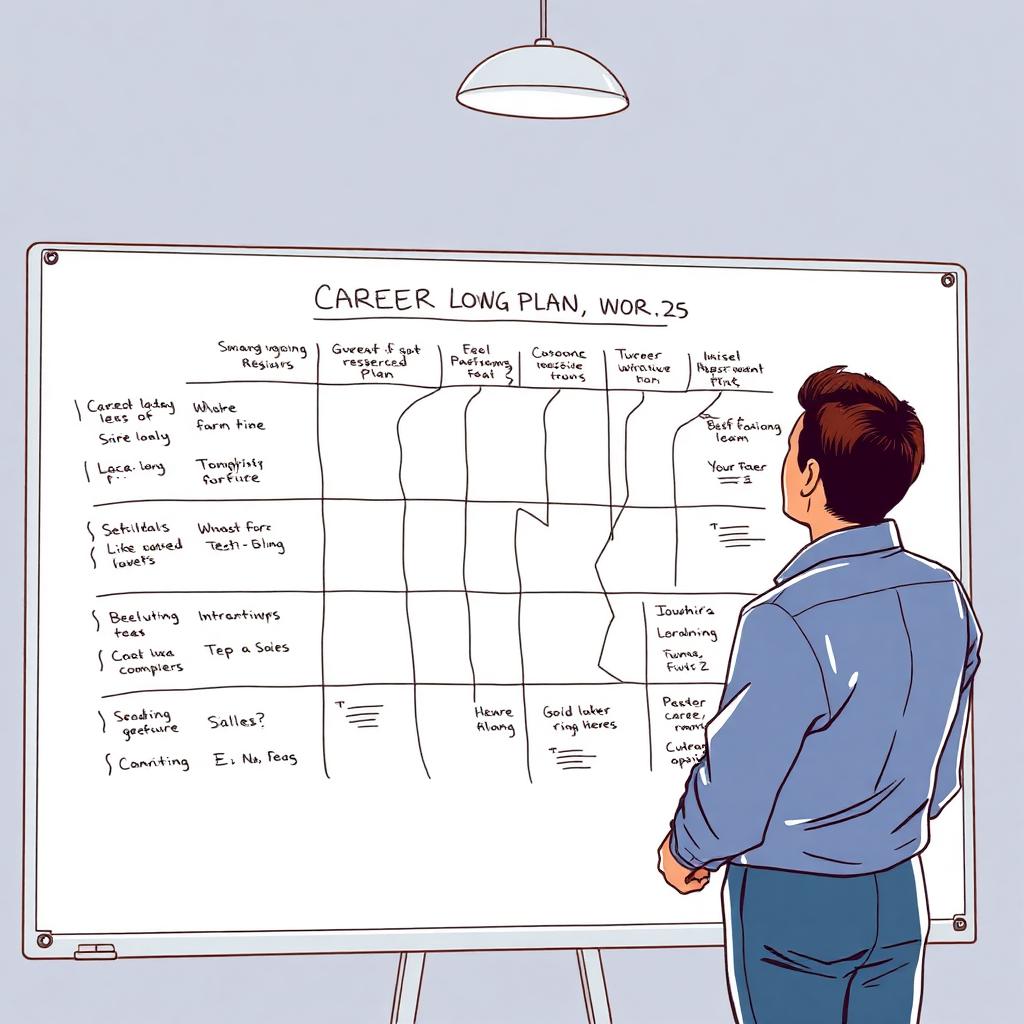
The phrase 'five-year career plan' triggers understandable skepticism. The world changes too quickly, industries reshape too aggressively, and personal circumstances shift too often for any detailed five-year plan to survive contact with reality. Most people who write elaborate five-year plans watch them become useless within twelve months, which reinforces the common conclusion that planning that far ahead is a waste of time. That conclusion is wrong, but for a specific reason. The problem with most five-year plans is not that they plan too far ahead — it is that they plan the wrong things. A good five-year plan is not a detailed roadmap of promotions, titles, and salaries. It is a framework for making the next decision well, a set of principles for evaluating opportunities as they arise, and a clear sense of the specific direction you are moving even when the exact path stays flexible. This guide walks through how to build that kind of plan, why it holds up better than the traditional version, and how to use it to make consequential career decisions with confidence rather than anxiety.
Why Traditional Five-Year Plans Fail
The traditional five-year plan treats a career as a predictable sequence of promotions on a specific timeline. 'Promoted to senior at year two, manager at year three, director at year five.' The plan is precise, specific, and almost always wrong within a year, because it assumes the promotions will happen on the timeline you predicted at the companies you predicted with the compensation you predicted. Any one of those assumptions failing invalidates the plan, and typically several do. Beyond the prediction problem, the traditional plan is also fragile because it treats the future as a single path. If you are executing a specific plan and an unexpected opportunity appears — a role at a different company, an entirely new career direction, a chance to move to a new industry — the plan makes it harder to evaluate the opportunity clearly, because your identity is now tied to the specific path you had committed to. Many people miss the best opportunities of their careers because they were too invested in the plan they wrote three years earlier. The deeper issue is that most traditional five-year plans focus on outcomes (titles, compensation, companies) rather than on capabilities, relationships, and reputation, which are the things that actually determine what outcomes are available to you. A plan focused on 'becoming the person who can lead X kind of work' holds up much better than a plan focused on 'getting promoted to Y by year Z,' because the underlying capabilities give you optionality across many specific paths rather than committing you to one.
The Better Alternative: A Direction, Not a Destination
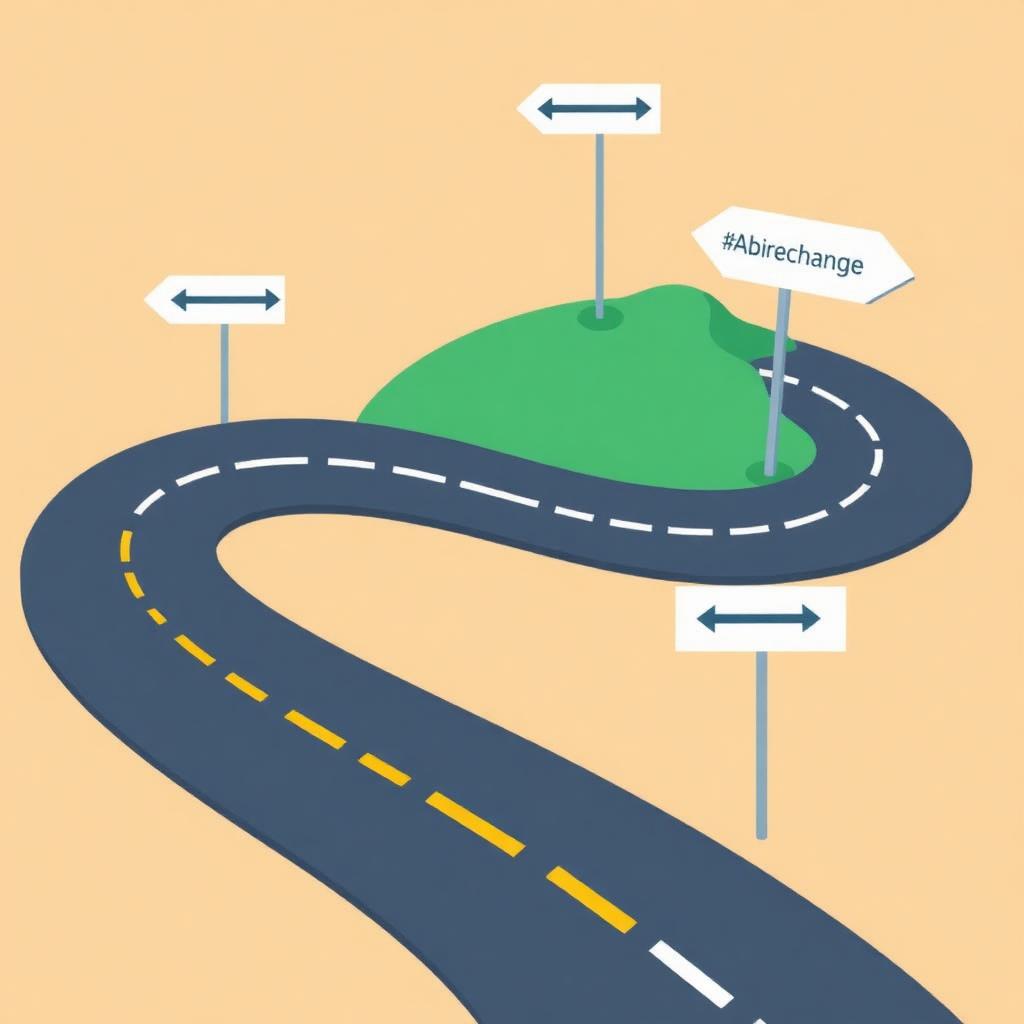
The kind of five-year plan that actually helps is oriented around direction rather than destination. Instead of specifying the exact title you want to have in five years, specify the kind of work you want to be doing, the kind of impact you want to be having, and the kind of person you want to have become. These are much more stable targets than specific job titles, and they hold up across changes of employer, industry, and even geography. Start with two or three specific directional statements. 'In five years, I want to be leading complex cross-functional initiatives that affect the entire company, not just a single team.' 'In five years, I want to have deep expertise in a specific area that makes me one of the two or three people in the industry others come to for that particular problem.' 'In five years, I want to be working on problems where the outcome matters beyond just business metrics.' Statements like these give you a compass for evaluating opportunities without locking you into a specific path. Underneath the directional statements, identify the specific capabilities you would need to develop and the specific reputation you would need to build for the direction to be realistic. If the direction is toward complex cross-functional leadership, the capabilities include influence without authority, comfort with ambiguity, and a specific facility with stakeholder management. If the direction is toward deep expertise, the capabilities include focused technical development, published thinking in the area, and a network of practitioners at the same level. These are the actual things to work on over five years, and they translate into specific choices at the level of the next job, the next project, and the next conversation.
The Two-Year Detail Layer
While the five-year layer stays directional, the two-year layer of the plan should be much more specific. Two years is roughly the horizon over which your current environment stays reasonably stable — your manager, your company's strategy, your industry's dynamics — and it is short enough that specific commitments have a reasonable chance of holding up. At the two-year layer, name the specific role you want to have, the specific projects you want to have led, and the specific reputation you want to have built by the end of the period. 'In two years, I want to be a senior individual contributor with a track record of leading three major initiatives, known specifically for handling complex stakeholder situations well, with a strong performance review history that positions me for the manager conversation.' This kind of specificity is actionable in the way the five-year plan is not. The two-year layer should be revisited every six months, not just at the two-year mark. Every six months, honestly ask: are the commitments in the plan still the right ones given how the environment has evolved? Are the specific projects and roles still available in the form the plan assumed? Have new opportunities emerged that should be added? Have specific things become less relevant and should be dropped? The plan is a living document, not a fixed contract, and the discipline of reviewing it regularly is what keeps it useful rather than obsolete.
The Next-Move Layer
Underneath the five-year and two-year layers is the next-move layer, which is where most of the actual decisions get made. The next-move layer answers: what is the single most important thing I should be focused on right now, given the direction I am moving? This is the layer that translates the plan into weekly and monthly behavior, and without it the higher-level layers are just abstract aspirations. At any given time, the next-move layer should typically include one to three specific things. Perhaps a specific capability you are trying to build, a specific relationship you are trying to develop, a specific project you are trying to earn a chance to lead, or a specific external option you are trying to keep open. Whatever the items are, they should be concrete enough that you can name the specific weekly behavior they translate into. 'Building the reputation for handling complex customer situations' translates into 'volunteer for the specific difficult conversations that come up on my team.' 'Keeping external options open' translates into 'take one recruiter call a month and update the resume every quarter.' The next-move layer is where the plan meets the daily calendar. If your plan says one thing and your calendar shows you doing another, the plan is not real — the calendar is. Regularly checking the alignment between the two is one of the most useful discipline in the entire planning process, because it surfaces the gap between what you say you are working toward and what you are actually spending your time on.
Handling the Curveballs the Plan Did Not Anticipate
No matter how thoughtfully constructed, the plan will encounter curveballs. A layoff that eliminates your team. A recruiter's call about a role you had not considered. A personal life change that shifts your priorities. An industry disruption that changes what the good career paths even look like. How you handle these moments — whether you treat them as threats to the plan or as new information to incorporate — often matters more than the plan itself. The correct move in a curveball moment is to zoom back out to the directional layer. If the direction you were moving is still the right direction, evaluate the curveball against that direction. Does this new opportunity, threat, or change move you toward that direction faster, or does it move you away from it? Sometimes a layoff is the specific catalyst you needed to pursue a direction you were being too cautious about. Sometimes an attractive recruiter offer is a distraction from a direction you were making real progress on. The direction gives you a stable basis for evaluating whether the curveball is an opportunity or a temptation. Sometimes the curveball is significant enough to warrant revising the direction itself. That is fine — the direction is not a permanent commitment. But be honest about the difference between actually updating your direction based on new information and rationalizing a reactive choice you were going to make anyway. A useful test: would you have chosen this direction six months from now, in a calmer moment, once the immediate pressure of the curveball had passed? If yes, the update is real. If not, it may be worth waiting a bit before committing.
Common Planning Mistakes to Avoid
Several specific mistakes make five-year plans less useful, and avoiding them is often more important than adding new features to the plan.
- Making the plan too specific about titles, compensation, and companies rather than direction and capabilities.
- Treating the plan as a fixed commitment rather than a living document.
- Writing the plan once and never revisiting it — the plan needs regular review to stay useful.
- Sharing the plan too widely — the plan is a private tool, not something to publish.
- Confusing the plan with a to-do list — the plan is a compass, not a task tracker.
- Building the plan around what other people would consider impressive rather than what you actually want.
- Not building in real optionality — a plan with no room for opportunities you did not anticipate is too fragile to survive.
Making the Plan Real Through Regular Rituals
The final piece of the puzzle is the specific rituals that keep the plan alive rather than letting it become another document you wrote once and forgot about. Without these rituals, even the best-designed plan becomes irrelevant within a year. Schedule a specific quarterly review of the plan, on the calendar, treated with the same seriousness as any important meeting. During the review, honestly assess progress against the two-year layer, the next-move layer, and the underlying directional statements. What worked? What did not? What needs to change based on what you have learned? Write down the updates, so that the next quarterly review has a real record to work from. Over years, this record becomes an extraordinarily valuable document showing how your thinking has evolved and what patterns have played out in your actual career. Alongside the quarterly review, use natural transition moments — a new manager, a new project, a new role, a new company — as opportunities to update the plan more substantially. These moments come with fresh information about what is actually possible, and integrating that information into the plan keeps it current in ways the ordinary quarterly review often does not. Combined with strong external materials — updated regularly through Resumeva's Resume Builder, screened against real job descriptions with the ATS Resume Checker, and complemented by the Cover Letter Builder when specific opportunities emerge — a living five-year plan becomes the difference between a career that happens to you and a career you are actively directing.
Build your ATS-friendly resume
Choose a layout and build a resume using your own experience.
Check your ATS score
Review what Resumeva extracts and the findings its own scoring method produces.
Frequently asked questions
Are five-year plans actually useful?+
The traditional version — a detailed roadmap of titles and compensation — is not. The version that works is a direction, not a destination: a set of principles for evaluating opportunities as they arise, plus a clear sense of the specific capabilities and reputation you want to build.
How specific should the five-year layer be?+
Directional rather than specific. Instead of 'promoted to director at year five,' aim for 'leading complex cross-functional initiatives that affect the whole company.' Directional statements hold up across changes of employer, industry, and geography.
How is the two-year layer different?+
Much more specific. Name the specific role, specific projects, and specific reputation you want to have built by the end of the period. Two years is short enough that concrete commitments have a reasonable chance of holding up.
How often should I revisit the plan?+
Schedule a specific quarterly review, on the calendar, treated with the same seriousness as any important meeting. Also use natural transitions — new manager, new role, new company — as opportunities to update more substantially.
What should I do when an unexpected opportunity appears?+
Zoom back to the directional layer and evaluate the opportunity against the direction you were moving. Does it move you toward that direction faster, or is it a temptation that pulls you away from real progress?
How do I make sure the plan translates into daily behavior?+
The next-move layer. At any time, name the one to three specific things you should be focused on now, and check that your calendar reflects them. If the plan says one thing and the calendar shows another, the calendar is real and the plan is not.
Keep building
Tools and examples that pair with this guide.
General career guidance and examples. Adapt suggestions to your own experience; employer requirements and hiring outcomes vary.